Disclosure: As an Amazon Associate, we earn from qualifying purchases made through links on this page.
Prices come from Amazon and were right at the time shown. They can change; the price on Amazon at checkout is the one you pay.
Quick Picks
| # | Pick | |
|---|---|---|
| 1 |  Naked Pea Protein Our #1. One ingredient, yellow-pea protein, 27 g per 2-scoop serving. |
$57.99Check price |
| 2 |  PlantFusion Complete Protein Our #3. Pea, artichoke, amaranth, quinoa and algae; listed free of soy, dairy, gluten, nuts and eggs. |
$49.85Check price |
| 3 | 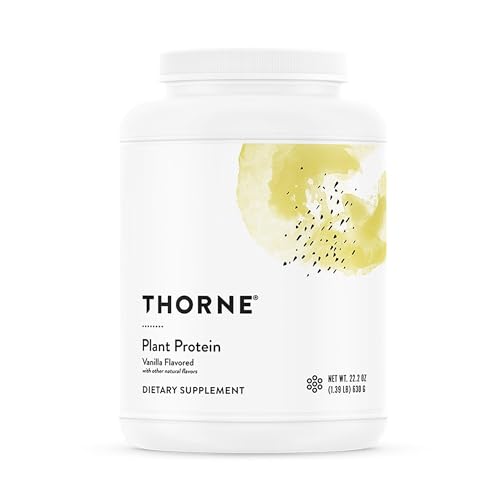 Thorne Plant Protein Our #8. Pea, chia and rice; Thorne labels it soy-free, and it’s NSF Certified for Sport. |
$49.00Check price |
| 4 |  Orgain Organic Plant-Based Protein Powder Our #11. Pea, brown rice, mung bean and chia, with sunflower lecithin instead of soy. |
$31.98Check price |
The Breakdown
Good news for soy dodgers: none of our top 12 lists soy as an ingredient. Every one of them is built on pea protein, with rice, seeds or grains filling out the blend. The fine print is the “made in a facility” line, and that’s where this page earns its keep.
People skip soy for different reasons. Some have a diagnosed allergy, some just don’t like it, and some were told to by a doctor. A 2023 European meta-analysis put self-reported soy allergy at about 0.5% of people and food-challenge-confirmed soy allergy at about 0.3%. Uncommon, but very real when it’s you.
Soy on the label: the FDA rules
Soybeans are one of the nine major food allergens in the US, alongside milk, eggs, fish, crustacean shellfish, tree nuts, peanuts, wheat and sesame. If an ingredient comes from soy, the label has to say so, either in parentheses, like “lecithin (soy),” or in a “Contains: Soy” line. Highly refined oils are the exception.
The “may contain” and “made in a facility that also processes soy” lines are a different animal. The FDA says they are voluntary and “not required by law.” So a tub with that line isn’t confessing to soy, and a tub without it hasn’t promised you anything either. With a real allergy, ask the brand how it handles shared equipment.
Soy-spotting cheat sheet: soy protein isolate, soy lecithin, textured vegetable protein (TVP, often soy), edamame, miso, tempeh and tofu. Lecithin can come from soy or sunflower; three of our top 12 (Optimum Nutrition, Ritual and Orgain) use sunflower lecithin.
Our top 12, checked for soy
| # | Powder | Soy ingredient? | Soy facility statement? | Protein sources |
|---|---|---|---|---|
| 1 | Naked Pea | No | None found | Pea |
| 2 | Vega Protein + Recovery | No | Yes (also milk, peanuts, eggs, tree nuts, sesame) | Pea, pumpkin seed, sunflower seed |
| 3 | PlantFusion Complete | No | None found; retailer lists it free of soy | Pea, artichoke, amaranth, quinoa, algae |
| 4 | Optimum Nutrition Gold Standard Plant | No (sunflower lecithin) | None found | Pea, fava bean, brown rice |
| 5 | Purely Inspired Organic | No | Yes on the vanilla (also egg) | Pea, brown rice |
| 6 | Garden of Life RAW Organic | No | Yes (also egg, milk, wheat, fish, tree nuts); contains sesame | Pea, sprouted brown rice, 12 sprouted seeds and legumes |
| 7 | Truvani | No | Yes (also milk, eggs, fish, shellfish, tree nuts, peanuts, wheat, sesame) | Pea, pumpkin seed, chia |
| 8 | Thorne Plant Protein | No; Thorne labels it soy-free | None found | Pea, chia, rice |
| 9 | Ritual Essential Protein | No (sunflower lecithin) | None found | Pea |
| 10 | Momentous | No | None found | Pea, brown rice |
| 11 | Orgain Organic Protein | No (sunflower lecithin) | None found | Pea, brown rice, mung bean, chia |
| 12 | KOS Organic Plant Protein | No | None found; contains coconut | Pea, flax, quinoa, pumpkin seed, chia |
# = our overall rank. “None found” means our label research didn’t turn one up, not a guarantee; these statements are voluntary and labels change. Read your own tub.
The soy-free bench: pea, rice and seeds
Pea is the backbone of all 12. In a 12-week trial, 161 men aged 18 to 35 followed the same arm-training program and took 25 g of pea protein, whey or a placebo twice a day. Biceps got thicker across the board; pea and whey didn’t differ, and pea beat placebo among the weakest starters. One trial, one muscle, men only, but a decent sign that pea pulls its weight. The longer version is in vegan protein vs whey.
Rice is pea’s usual sidekick: six of our top 12 pair them. Plant proteins tend to run lower in methionine and lysine than animal proteins, and a 2018 analysis of plant protein isolates found the amino acid profiles differ a lot from one plant to the next. Blending sources is how brands even out the mix.
Seeds, grains and other legumes fill the gaps: pumpkin seed (Vega, Truvani, KOS), chia (Truvani, Thorne, Orgain, KOS), sunflower seed (Vega), flax and quinoa (KOS), amaranth and quinoa (PlantFusion), fava bean (Optimum Nutrition) and mung bean (Orgain). Hemp isn’t in any of our top 12; see types of vegan protein powder for how it stacks up.
One allergy caution: pea is a legume too
Swapping soy for pea swaps one legume for another. Pea isn’t one of the FDA’s nine, but a 2024 review calls pea, lentil, chickpea and lupine potentially important new allergen sources, notes that severe reactions have been described for pea and lupine, and says most reactions come from cross-reactions between similar legume proteins. Diagnosed soy allergy, or on thyroid medication and wondering how to time meals and shakes? Ask your allergist, doctor or pharmacist. They know your chart; we know tubs.
The Picks
Naked Pea Protein: Our #1 (84/100). One ingredient: protein from yellow split peas grown on US and Canadian farms, per the brand. Twenty-seven grams per 2-scoop serving, Informed Choice and NSF Contents Certified, and the cheapest per 20 g of protein in our top 12. Unflavored, so it slides into smoothies, oats or baking without a fight. Full review.
Naked Pea Protein$57.99 as of Nov 22, 1:56 AM ETCheck price on Amazon →Read our review →
PlantFusion Complete Protein: Our #3 (70/100). Twenty-one grams per 30 g scoop from pea protein isolate, artichoke, sprouted amaranth, sprouted quinoa and whole algae protein, plus added BCAAs. A retailer listing says it’s free of dairy, soy, gluten, nuts and eggs. It has the top taste sub-score in our top 12 (23 of 25), and VegFAQs gave it 25 of 25 for mixing. Consumer Reports measured 140% of its lead level of concern in the Creamy Vanilla Bean (Oct 2025), and a 2025 Prop 65 notice names its Rich Chocolate and Cookies and Cream flavors (an allegation). Full review.
PlantFusion Complete Protein$49.85 as of Nov 22, 1:56 AM ETCheck price on Amazon →Read our review →
Thorne Plant Protein: Our #8 (63/100). Twenty-two grams of pea, chia and rice protein per 2-scoop serving, sweetened with Reb M and monk fruit. Thorne labels it soy-free (Thorne’s own label, not an outside certification), and it’s NSF Certified for Sport. The catches: 570 mg sodium, the most in our top 12; a Prop 65 lead warning on the label; and it’s too new for a Consumer Reports test. Full review.
Thorne Plant Protein$49.00 as of Nov 22, 1:56 AM ETCheck price on Amazon →Read our review →
Orgain Organic Plant-Based Protein Powder: Our #11 (60/100). Twenty-one grams of pea, brown rice and mung bean protein plus chia per 2-scoop (46 g) serving, with sunflower lecithin in the creamer instead of soy. USDA Organic and the third-cheapest per 20 g of protein in our top 12. Consumer Reports measured 143% of its lead level of concern in the Vanilla Bean (Oct 2025), and a July 2026 class action over lead names its Vanilla Bean and Creamy Chocolate Fudge (allegations). Full review.
Orgain Organic Plant-Based Protein Powder$31.98 as of Nov 22, 1:56 AM ETCheck price on Amazon →Read our review →
Label check when shopping: read the Contains line first, then the ingredient list, then the facility line. See lecithin? Make sure it says sunflower. Check the tub in your hand, not the listing photo, because formulas change. Then aim for at least 20 g of protein per serving and look for published heavy-metal results; our heavy-metals guide lists every test we could find. Soy stays off the label, and no tofu is required.
Quick Questions
Which of your top 12 contain soy?
None lists soy as an ingredient. Four print a shared-facility line that mentions soy: Vega, Purely Inspired (vanilla), Garden of Life and Truvani.
Does “made in a facility that also processes soy” mean it contains soy?
Not necessarily. The FDA says these statements are voluntary. They flag possible cross-contact; they don’t measure it. With a real allergy, ask the brand and your allergist.
Is sunflower lecithin soy?
No. It comes from sunflower seeds. If lecithin came from soy, FDA rules mean the label would have to say soy.
Is pea protein OK if I’m allergic to soy?
That’s one for your allergist. Pea is a legume like soy, and cross-reactions between legume proteins happen. Get the green light before you switch.
Is soy protein bad for you?
We rank tubs, not health questions. For a straight comparison of the two proteins, see pea protein vs soy protein.
Sources
- FDA: Food allergies (major allergens, labeling, advisory statements)
- Prevalence of eight big food allergies in Europe: updated meta-analysis (Allergy, 2023)
- Legume allergens pea, chickpea, lentil, lupine and beyond (Curr Allergy Asthma Rep, 2024)
- Pea vs whey vs placebo during 12 weeks of resistance training (Babault et al., 2015)
- Protein content and amino acid composition of plant-based protein isolates (Gorissen et al., 2018)
- Naked Pea product page
- PlantFusion Complete Protein listing (Vitacost)
- Thorne Plant Protein (Vanilla) product page
- Orgain Organic Protein (Vanilla Bean) product page
- Vega Protein + Recovery product page (allergen statement)
- Purely Inspired Organic Protein label panels (PricePlow)
- Garden of Life RAW Organic Protein (Vanilla) label (Swanson)
- Truvani Plant Based Protein (Vanilla) listing and label
- Ritual Essential Protein product page
- Optimum Nutrition Gold Standard 100% Plant product page
- Consumer Reports: protein powder lead tests (Oct 2025, updated Jan 2026)