Disclosure: As an Amazon Associate, we earn from qualifying purchases made through links on this page.
Prices come from Amazon and were right at the time shown. They can change; the price on Amazon at checkout is the one you pay.
The annoying truth: vegan protein is not the villain. Usually. FODMAPs are fermentable carbs, not protein. But protein powders love dragging along the wrong entourage — inulin, chicory root fiber, sugar alcohols, mystery gums, giant servings, and “superfood blends” that look like someone emptied a wellness drawer into a tub.
Monash University’s FODMAP team gives the gut math: poorly absorbed short-chain carbs can pull water into the intestine, then ferment and produce gas. The American College of Gastroenterology backs a limited low-FODMAP trial for IBS symptoms. Translation: fewer fermentable hitchhikers, fewer digestive fireworks.
Quick gut disclaimer: IBS should be diagnosed by a clinician, not TikTok, vibes, or one traumatic burrito. These are low-FODMAP-friendly strategies, not certified medical prescriptions. Severe, bloody, sudden, or new symptoms? Get a real doctor, not a shaker cup.
What Makes a Vegan Protein Powder IBS-Friendly?
For IBS, “plant-based” is not enough. A powder can be vegan and still hit your gut like a marching band in a broom closet. Look for:
- Minimal ingredients: fewer places for digestive betrayal to hide.
- Protein isolate over whole-legume chaos: isolates strip away more carbs, which is useful when fermentable carbs are the problem.
- No inulin or chicory root: lovely for some microbiomes, absolute goblin fuel for others.
- No sugar alcohol circus: sorbitol, mannitol, xylitol, maltitol — if it ends in “ol,” your colon may file charges.
- Moderate serving size: 20 to 27 grams of protein is plenty. You are feeding muscle, not pressure-washing your intestines.
The IBS rule: boring beats heroic. A clean half-scoop you tolerate is better than a gourmet mega-shake that turns your afternoon into weather.
If your stomach is sensitive even without the IBS label, our sensitive stomach guide is the broader map. This article is the “please stop detonating my lower intestine” edition.
The Best Vegan Protein Powders for IBS
🥇 Naked Pea Protein — Best Overall for IBS Simplicity
Naked Pea is the blunt instrument your gut may actually respect. One ingredient: yellow pea protein isolate. No stevia. No gums. No prebiotic fiber ambush. No birthday-cake flavor doing jazz hands in your digestive tract.
That matters because IBS is already a chaos goblin. Fewer variables means fewer suspects. Naked Pea gives you 27 grams of protein per two-scoop serving, but start with one scoop in water or almond milk. Boring? Yes. Useful? Also yes.
Flavor? Unflavored pea protein tastes earthy. Not romantic. Not tragic. Just earthy. Blend it cold and move on with your adult life.
 Naked Pea Protein$57.99 as of Nov 3, 10:38 PM ETCheck Price on Amazon →
🥈 Ritual Essential Protein — Best Single-Protein Flavored Pick
Ritual Essential Protein is for people who read ingredient panels like cross-examination transcripts. One protein source (organic pea), 0 grams of sugar, and no inulin, chicory or sugar alcohols on the label. Sweetness comes from Reb M (a stevia extract) and monk fruit, and xanthan gum is the only gum. Reviewers rate its taste and mixing the best in our top 10. Read our full review.
For IBS, the appeal is predictability. The formula is not trying to be a multivitamin, greens powder, fiber supplement, and dessert cart at the same time. That restraint deserves applause. Quiet applause. Your gut startles easily.
The catch is price: it’s the most expensive protein per gram in our top 10. Ritual is the “my stomach has unionized” option. If cheaper powders keep betraying you in public, the math starts looking less insane.
 Ritual Essential Protein$48.99 as of Nov 3, 10:38 PM ETCheck Price on Amazon →
🥉 PlantFusion Complete Protein — Best Smooth Texture
PlantFusion has a rare vegan-protein superpower: it mixes without behaving like wet drywall. The blend uses pea, artichoke, sprouted amaranth, and sprouted quinoa proteins, plus digestive enzymes.
That does not guarantee IBS peace. Nothing does. But PlantFusion is smooth, moderate, and easier to sip than the gritty stuff that makes you chew your shake like a Victorian prisoner.
Start small here too. Enzymes help some people, do nothing for others, and occasionally annoy the gut they were hired to calm. Half scoop. Cold liquid. No heroics.
 PlantFusion Complete Protein$49.85 as of Nov 3, 10:38 PM ETCheck Price on Amazon →
4. Momentous 100% Plant Protein — Best Gum-Free Blend
Momentous 100% Plant Protein is useful when gums are on your suspect list. It’s mostly pea protein with a little brown rice, 20 grams per scoop, and the brand says it’s free from gums, fillers and stabilizers. The Vanilla Spice we link adds cinnamon, ginger, anise, black pepper, 2 grams of cane sugar and stevia, so check those against your own list. Read our full review.
Blends are personal for IBS. Some people tolerate them beautifully. Others discover one ingredient is playing the tuba directly into their colon. Test one small serving, alone, before building a smoothie with unresolved ambition.
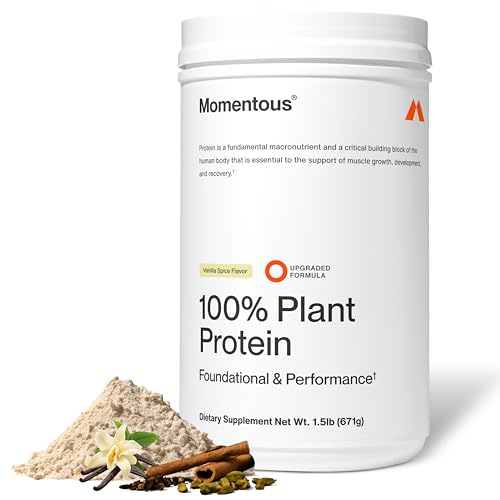 Momentous 100% Plant Protein$49.99 as of Nov 3, 10:38 PM ETCheck Price on Amazon →
5. Garden of Life Raw Organic Protein — Best Organic Option, If You Tolerate It
Garden of Life Raw Organic Protein brings the organic résumé: sprouted plant proteins, enzymes, probiotics, and 22 grams of protein. For some IBS users, that is elegant. For others, it is too much personality in one scoop.
This is for people who already tolerate sprouted blends and probiotic-style formulas. If your gut hates surprises, do not debut it with coffee, oats, chia, and frozen mango. That is a lineup, not a test.
 Garden of Life Raw Organic Protein$35.69 as of Nov 3, 10:38 PM ETCheck Price on Amazon →
Ingredient Traps That Make IBS Worse
The front label will say “clean.” Ignore it. Front labels are billboards with abs. Flip the tub and hunt for:
- Inulin/chicory root/FOS/GOS: prebiotic fibers that can be gas confetti for IBS.
- Sugar alcohols: sorbitol and mannitol are FODMAP problem children.
- Huge fiber claims: suddenly high fiber can be a colon jump scare.
- Greens blends: adorable idea. Often a FODMAP mystery bag.
- Mass-gainer serving sizes: three scoops is not a serving. It is a dare.
Also watch your mix-ins. A low-drama powder becomes a gut grenade with apple, mango, cashews, honey, and enough dates to mummify a horse. Use boring basics: water, almond milk, strawberries, cocoa, or peanut butter in sane amounts.
How to Test a Protein Powder When You Have IBS
- Start with half a scoop. Your ego does not digest protein. Your gut does.
- Use water first. Then add almond milk or other tolerated bases once the powder passes inspection.
- Test it alone. No new supplement stack. No experimental smoothie circus.
- Give it 24 hours. IBS reactions are not always immediate. The gut likes suspense.
- Track patterns. Powder, serving size, liquid, symptoms. Notes beat mystical guessing.
For muscle, the boring science still applies. Sports nutrition guidelines commonly put active people around 1.4 to 2.0 grams of protein per kilogram per day, with 20 to 40 grams per serving as a useful muscle-building range. IBS does not cancel your protein needs. It just demands better logistics.
The Bottom Line
If IBS makes every shake feel like gastrointestinal roulette, start simple. Naked Pea is the cleanest first move. Ritual is the premium single-protein play. PlantFusion wins on smoothness. Momentous gives you a gum-free blend. Garden of Life works if your gut tolerates the fuller organic formula.
Do not chase the fanciest tub. Chase the one that lets you hit protein without inflating like parade equipment. IBS is annoying enough. Your shaker does not need to join the enemy.
Need adjacent help? Read our stevia-free guide, vegan protein and gut health explainer, and clean-label rankings. Same mission: more muscle glue, less digestive theater.